
This week is National Drowning Prevention Week, and Canadians are being urged to be water smart.
Lifesaving Society Ontario Senior Communications Officer Stephanie Bakalar says being water smart starts before you leave the house with friends and family for a day out on the water.
"If I'm heading to a water park, will I need my own lifejackets? Will they supply lifejackets? Same thing if I'm heading to the beach. Will there be lifejackets there? What if I get to the beach and the water is really rough? Will I need that lifejacket? Will I need a first-aid kit? Are there lifeguards there? Going over and planning around these things can save a life," Bakalar stated.
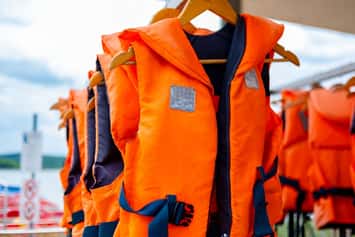
Bakalar adds that families need to have a talk with kids before going to an event on the water about plans if certain things happen, and supervision of young kids needs to be consistent. According to numbers from the Lifesaving Society, for children under the age of five, supervision was absent or distracted in 98 per cent of drowning fatalities. She notes that overall, a huge factor in preventing drowning deaths is wearing a lifejacket, especially when boating with friends and family.
"So about 92 per cent of drowning deaths that happen while boating, we find the victims aren't wearing a lifejacket. This isn't just your power boats or sea-doos. This is kayaks, canoes, paddle boards. So we really need people to flip the narrative that having it with you is enough. It's actually wearing that lifejacket that can make all the difference," Bakalar stressed.
With respect to being "water-smart", Bakalar says the Lifesaving Society wants people to remember some easy safety pointers that will help ensure everyone is as safe as possible.
"So we have things like staying within arms reach, and that means when you're near or in the water with your kids, you can always reach out and grab them. Wear your lifejacket. Also, swim with a buddy. Most drownings that happen when people are alone happen strictly because you are alone, and no one is there to help you," Bakalar noted.
About 37 per cent of drowning fatalities happen when the victim is alone, according to numbers from the Lifesaving Society. Another huge factor is being an adequate swimmer. Bakalar says in about 39 per cent of drownings nationally, people were weak swimmers. She says the Swim to Survive minimum standard should ideally be met by everyone on the water.
"So that means you can roll into deep water, tread for one minute, so you were able to come up to the surface, look for a point of safety and tread for one minute, and then be able to swim at least 50 metres. A lot of drownings in Ontario and across Canada happen when people aren't even meaning to be in the water," she shared.
Bakalar says unintentional falls, particularly from boats and water craft, account for far too many drowning deaths. Being alone, consuming alcohol, being a weak swimmer, and unattended children are very common drowning death risk factors. You can learn more about preventing drowning deaths by visiting LifesavingSociety.com.
Four Steps to Safety
To help families stay protected, the Lifesaving Society recommends four essential steps before heading to the water:
Know before you go: Choose lifeguard-supervised settings and use the Lifesaving Society’s Water Smart® Tip Cards (available in 17 languages) to learn how to make safe choices.
Talk about your safety plan: Discuss rules and Water Smart messages – stay within arms’ reach, swim with a buddy, wear a lifejacket. Review “what-if” scenarios as a family to ensure everyone knows how to behave safely.
Pack with a “just in case” attitude: Always bring a lifejacket for everyone and a first aid kit. Include safety equipment relevant to your activity such as a whistle, throw rope, and boat safety kit.
Become a lifesaver: Learn to swim – make sure you can meet the Swim to Survive® standard, and take Swim for Life® swimming lessons, first aid and CPR, and Bronze Medallion courses to learn how to save yourself and others.